|
|
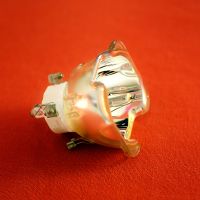
1967 Philips HPI 400W
|
The first commercial white-light metal halide lamps released in 1964 by GE (USA) and Osram/Radium (West Germany) were essentially high-pressure mercury lamps driven at a higher power load and dosed with a mixture of sodium, thallium and indium iodides, what would be later called the NTI or the three-band fill chemistry. The latter term refers to the fact that each of these additives radiates one of the three primary colors: indium for blue, thallium for green, and sodium for reddish-orange. The combination of those color in the right proportions results in what we perceive as white light. Beside a more effective production of white light compared to plain mercury lamps, a key advantage of this technology lies also in a light color point which can be adjusted freely via changes in the salt composition and dosage.
It is upon these principles that Philips of the Netherlands developed their HPI metal halide lamps, which were first released in 1965 in the form of 400 and 2000 W clear tubular models. The original HPI 400W, shown here, features a 3-part quartz burner placed in an evacuated tubular jacket whose vacuum is maintained by a large barium mirror getter. The thermal insulation conferred by vacuum and the graphite-coated conical extremities of the burner are crucial to the realization of a high salt vapor pressure needed for the efficient production of light. However, the low quality grade of fused quartz available at the time forced Philips (and other manufacturers) to keep the discharge power load and the burner temperature low so as to ensure a sufficiently long service life. Such constraint led to an electrode gap length of about 48 mm, which limited the discharge power load to 72 W/cm, still 41 % higher than in standard 400 W mercury lamps.
An important feature that was first introduced by Philips (C. Jacobs and H. Boort) is the side frame wire sheathed with a steatite tube. This is designed to limit the negative charging of the burner due to photoelectron emission from polarized metal parts. This process is responsible for the electrolytic loss of sodium from the quartz vessel, which affects the stability of key lamp properties such as light color and the (re-) ignition voltages. The latter critically determines the durability of the lamp as a too high value of these voltage parameters cause ignition failure or the self-extinction of the arc during the run-up phase. Moreover, the argon fill of the burner makes it highly sensitive towards the buildup of impurities, so Philips devised a thorough thermal treatment during production in order to further improve the lamp’s chemical stability.
The HPI 400W is designed to operate on (existing) mercury lamp gears provided with an soft ignitor connected across the lamp terminals. A reliable starting below the kilovolt level is guaranteed by an argon fill at about 20 mbar, while the mercury dosage is set for a operation in the horizontal position with an arc voltage of 125 V and a 3.4 A drive current, characteristics close to those of the 400 W mercury lamp. Differences in the electrical properties of the arc result in a power dissipation reduced by 5 % however. The photometric properties are also quite different, at 30.0 klm the initial light output is 36–43 % higher, and at 610 cd/cm² the source luminance is 33 % higher compared to the clear variant of the mercury lamp (53 times higher in the case of the phosphor-coated one). Interestingly, Philips balanced the fill chemistry in order to produce a light color similar to that of the HPL fluorescent mercury lamps of the time, which where characterized by a markedly greenish hue. This strategy enabled the seamless combination of HPI and HPL lamps in lighting installations (see there for more information).
Although a major step forward in performances and light color quality, this first HPI was also plagued by a short service life of 4000 h and large color spread and shift through life. The photoelectric emission from exposed frame parts in the vacuum environment of the burner even caused a 12–15 % decrease in light output in the first 2000 h of operation. This lamp eventually saw a major redesign in 1969 with the 2nd-generation HPI platform featuring a barrel burner with a shorter electrode gap length, a neon-argon Penning fill and a gas-filled outer jacket (see there). These upgrades effectively made the NTI-filled metal halide lamp an economically viable technology in the general lighting market.
|
|


 Forum
Forum Gallery Home
 Contact
 Login
Login Off-Topic
 Album list
 Last uploads
 Last comments
 Most viewed
 Top rated
 My Favourites
 Search
![1967 Philips HPI 400W
The first commercial white-light metal halide lamps released in 1964 by GE (USA) and Osram/Radium (West Germany) were essentially high-pressure mercury lamps driven at a higher power load and dosed with a mixture of sodium, thallium and indium iodides, what would be later called the NTI or the three-band fill chemistry. The latter term refers to the fact that each of these additives radiates one of the three primary colors: indium for blue, thallium for green, and sodium for reddish-orange. The combination of those color in the right proportions results in what we perceive as white light. Beside a more effective production of white light compared to plain mercury lamps, a key advantage of this technology lies also in a light color point which can be adjusted freely via changes in the salt composition and dosage.
It is upon these principles that Philips of the Netherlands developed their HPI metal halide lamps, which were first released in 1965 in the form of 400 and 2000 W clear tubular models. The original HPI 400W, shown here, features a 3-part quartz burner placed in an evacuated tubular jacket whose vacuum is maintained by a large barium mirror getter. The thermal insulation conferred by vacuum and the graphite-coated conical extremities of the burner are crucial to the realization of a high salt vapor pressure needed for the efficient production of light. However, the low quality grade of fused quartz available at the time forced Philips (and other manufacturers) to keep the discharge power load and the burner temperature low so as to ensure a sufficiently long service life. Such constraint led to an electrode gap length of about 48 mm, which limited the discharge power load to 72 W/cm, still 41 % higher than in standard 400 W mercury lamps.
An important feature that was first introduced by Philips (C. Jacobs and H. Boort) is the side frame wire sheathed with a steatite tube. This is designed to limit the negative charging of the burner due to photoelectron emission from polarized metal parts. This process is responsible for the electrolytic loss of sodium from the quartz vessel, which affects the stability of key lamp properties such as light color and the (re-) ignition voltages. The latter critically determines the durability of the lamp as a too high value of these voltage parameters cause ignition failure or the self-extinction of the arc during the run-up phase. Moreover, the argon fill of the burner makes it highly sensitive towards the buildup of impurities, so Philips devised a thorough thermal treatment during production in order to further improve the lamp’s chemical stability.
The HPI 400W is designed to operate on (existing) mercury lamp gears provided with an soft ignitor connected across the lamp terminals. A reliable starting below the kilovolt level is guaranteed by an argon fill at about 20 mbar, while the mercury dosage is set for a operation in the horizontal position with an arc voltage of 125 V and a 3.4 A drive current, characteristics close to those of the 400 W mercury lamp. Differences in the electrical properties of the arc result in a power dissipation reduced by 5 % however. The photometric properties are also quite different, at 30.0 klm the initial light output is 36–43 % higher, and at 610 cd/cm² the source luminance is 33 % higher compared to the clear variant of the mercury lamp (53 times higher in the case of the phosphor-coated one). Interestingly, Philips balanced the fill chemistry in order to produce a light color similar to that of the HPL fluorescent mercury lamps of the time, which where characterized by a markedly greenish hue. This strategy enabled the seamless combination of HPI and HPL lamps in lighting installations (see [url=https://trad-lighting.net/gallery/displayimage.php?pid=950]there[/url] for more information).
Although a major step forward in performances and light color quality, this first HPI was also plagued by a short service life of 4000 h and large color spread and shift through life. The photoelectric emission from exposed frame parts in the vacuum environment of the burner even caused a 12–15 % decrease in light output in the first 2000 h of operation. This lamp eventually saw a major redesign in 1969 with the 2nd-generation HPI platform featuring a barrel burner with a shorter electrode gap length, a neon-argon Penning fill and a gas-filled outer jacket (see [url=https://trad-lighting.net/gallery/displayimage.php?pid=664]there[/url]). These upgrades effectively made the NTI-filled metal halide lamp an economically viable technology in the general lighting market.
Keywords: Lamps](albums/userpics/10005/8/normal_Philips_HPI_400W_-_NL_1967.jpg "Click to view full size image
==============
1967 Philips HPI 400W
The first commercial white-light metal halide lamps released in 1964 by GE (USA) and Osram/Radium (West Germany) were essentially high-pressure mercury lamps driven at a higher power load and dosed with a mixture of sodium, thallium and indium iodides, what would be later called the NTI or the three-band fill chemistry. The latter term refers to the fact that each of these additives radiates one of the three primary colors: indium for blue, thallium for green, and sodium for reddish-orange. The combination of those color in the right proportions results in what we perceive as white light. Beside a more effective production of white light compared to plain mercury lamps, a key advantage of this technology lies also in a light color point which can be adjusted freely via changes in the salt composition and dosage.
It is upon these principles that Philips of the Netherlands developed their HPI metal halide lamps, which were first released in 1965 in the form of 400 and 2000 W clear tubular models. The original HPI 400W, shown here, features a 3-part quartz burner placed in an evacuated tubular jacket whose vacuum is maintained by a large barium mirror getter. The thermal insulation conferred by vacuum and the graphite-coated conical extremities of the burner are crucial to the realization of a high salt vapor pressure needed for the efficient production of light. However, the low quality grade of fused quartz available at the time forced Philips (and other manufacturers) to keep the discharge power load and the burner temperature low so as to ensure a sufficiently long service life. Such constraint led to an electrode gap length of about 48 mm, which limited the discharge power load to 72 W/cm, still 41 % higher than in standard 400 W mercury lamps.
An important feature that was first introduced by Philips (C. Jacobs and H. Boort) is the side frame wire sheathed with a steatite tube. This is designed to limit the negative charging of the burner due to photoelectron emission from polarized metal parts. This process is responsible for the electrolytic loss of sodium from the quartz vessel, which affects the stability of key lamp properties such as light color and the (re-) ignition voltages. The latter critically determines the durability of the lamp as a too high value of these voltage parameters cause ignition failure or the self-extinction of the arc during the run-up phase. Moreover, the argon fill of the burner makes it highly sensitive towards the buildup of impurities, so Philips devised a thorough thermal treatment during production in order to further improve the lamp’s chemical stability.
The HPI 400W is designed to operate on (existing) mercury lamp gears provided with an soft ignitor connected across the lamp terminals. A reliable starting below the kilovolt level is guaranteed by an argon fill at about 20 mbar, while the mercury dosage is set for a operation in the horizontal position with an arc voltage of 125 V and a 3.4 A drive current, characteristics close to those of the 400 W mercury lamp. Differences in the electrical properties of the arc result in a power dissipation reduced by 5 % however. The photometric properties are also quite different, at 30.0 klm the initial light output is 36–43 % higher, and at 610 cd/cm² the source luminance is 33 % higher compared to the clear variant of the mercury lamp (53 times higher in the case of the phosphor-coated one). Interestingly, Philips balanced the fill chemistry in order to produce a light color similar to that of the HPL fluorescent mercury lamps of the time, which where characterized by a markedly greenish hue. This strategy enabled the seamless combination of HPI and HPL lamps in lighting installations (see [url=https://trad-lighting.net/gallery/displayimage.php?pid=950]there[/url] for more information).
Although a major step forward in performances and light color quality, this first HPI was also plagued by a short service life of 4000 h and large color spread and shift through life. The photoelectric emission from exposed frame parts in the vacuum environment of the burner even caused a 12–15 % decrease in light output in the first 2000 h of operation. This lamp eventually saw a major redesign in 1969 with the 2nd-generation HPI platform featuring a barrel burner with a shorter electrode gap length, a neon-argon Penning fill and a gas-filled outer jacket (see [url=https://trad-lighting.net/gallery/displayimage.php?pid=664]there[/url]). These upgrades effectively made the NTI-filled metal halide lamp an economically viable technology in the general lighting market.
Keywords: Lamps")


Why didn't they go with a probe for ignition with these? I would assume that would be the first choice since it reflects the design of MV lamps, though it may or may not eliminate the need for an ignitor.
Interestingly, the probe-start MH design was adopted in larger NTI-filled lamps operating on 380-415 V circuits as this enabled a reliable ignition without the need for an electronic ignitor. For instance, that was the design of the original HRI 2000W released by Radium in 1964, a lamp that was made to retrofit 2 kW mercury lamps in existing sports floodlighting installations. Such design was still not widely adopted though (Philips never produced such probe-start lamp), and it was eventually phased out decades later as the use of electronic ignitors became the norm and enabled better lamp performances and flux maintenances (i.e., thanks to narrower electrode chambers and a higher gas fill pressure). As for medium-wattage MH lamps, Philips is certainly not the only lampmaker to have considered the problems associated with the probe-start design as this was also not widely adopted in Europe. The only 400 W probe-start NTI-filled lamp produced there that I know of is the Tungsram HgMIF 400W that you can see there. It was really an exception.